What Is Social Media Marketing?
Social media marketing is simply the use of social media to promote your business or brand.
For example, a business might use social media to show a new product, share helpful tips, answer questions, post customer reviews, or give people a look at what happens behind the scenes.
Suppose you own a small clothing store. You can post pictures of your new clothes on Instagram, make short videos for TikTok, answer questions on Facebook, and share fashion ideas on Pinterest.
In other words, you’re not only trying to sell something. Instead, you’re also showing people what your business offers and giving them a reason to remember your brand.
Why Is Social Media Marketing Important?
One of the best things about social media is that businesses can communicate directly with their customers.
For instance, someone can see your post, leave a comment, ask a question, send you a message, visit your website, or share your content. As a result, businesses can have conversations with customers that are much more direct than traditional advertising.
Here are some common reasons businesses use social media.
Build Brand Awareness
First of all, if people don’t know your business exists, they can’t become your customers.
Therefore, posting regularly can help more people become familiar with your business. You don’t need every post to become popular. Instead, simply being active and sharing useful content can gradually help people remember your brand.
Reach New Customers
In addition, social media can help you reach people outside your current audience.
For example, a useful post or interesting video can be shared by someone who follows you and then seen by people who have never heard of your business. As a result, your content may introduce your brand to potential customers.
Build Trust
Just as importantly, people like to know who they are buying from.
Because of this, social media gives you a place to answer questions, show customer reviews, explain your products, and share parts of your everyday business.
This can make your business feel more genuine and approachable. Over time, these small interactions can help build trust.
Bring People to Your Website
Social media can also help bring visitors to your website.
For example, if you write a detailed blog post, you can share a short version of the topic on Facebook or LinkedIn and invite people to read the full article on your website.
As a result, social media can work together with your website and help more people discover your content.
Help Generate Sales
Social media can also help people discover your products and understand what you offer.
For example, you can show products in use, explain their benefits, share customer experiences, and answer questions before someone decides to buy.
However, you don’t need to make every post a sales pitch. In fact, too many promotional posts can quickly become annoying. Instead, try to balance promotional content with useful and interesting posts.
Which Social Media Platform Is Best?
There isn’t one platform that works for every business. Therefore, the best choice depends on your audience, business type, and the kind of content you want to create.
Facebook
Facebook can be useful for local businesses, communities, groups, customer communication, and advertising.
Instagram
Similarly, Instagram is a good choice for businesses that rely heavily on visual content, including fashion, food, beauty, travel, products, and lifestyle brands.
TikTok
Meanwhile, TikTok is focused mainly on short videos. Businesses can use it for tutorials, product demonstrations, entertaining videos, and quick tips.
YouTube
YouTube, on the other hand, is useful for longer videos, tutorials, product reviews, educational content, and demonstrations.
LinkedIn
For professional businesses, LinkedIn can be a good option for professional services, B2B businesses, recruitment, networking, and personal branding.
Pinterest
Finally, Pinterest can be useful for recipes, fashion, home ideas, DIY projects, products, and blog content.
Overall, you don’t need to use every platform. Instead, start with the ones where your customers are most likely to spend their time.
How to Start Social Media Marketing
Getting started doesn’t have to be difficult. In fact, a simple plan can make the process much easier.
1. Know Your Audience
First, think about who you want to reach.
What are they interested in? What problems do they have? What questions do they ask? Which platforms do they use?
Once you understand these things, you can make better decisions about the type of content you should create.
2. Choose a Goal
Next, decide what you want from social media.
You might want to:
Most importantly, having a clear goal makes it easier to see whether your efforts are actually helping.
3. Share Useful Content
Don’t make every post about selling something.
Instead, people are more likely to follow an account when they regularly get something useful from it.
For example, you can share:
Tips
Tutorials
Short videos
Product information
Customer reviews
Questions
Industry news
Behind-the-scenes posts
Helpful guides
Before you post, think about whether your audience will find it useful, interesting, or entertaining. If it does, you’re more likely to get a positive response.
4. Keep Posting Regularly
After that, try to maintain a realistic posting schedule.
You don’t have to post all day. Instead, choose a schedule that works for you and stick with it.
Posting consistently is more practical than posting a lot for a few days and then disappearing. Even a few good posts each week can give you something to build on.
5. Respond to People
Finally, don’t forget the social part of social media.
Reply to comments and messages. If someone asks a question, try to give them a useful answer.
As a result, these small conversations can help people feel more comfortable with your business and may encourage them to come back again.
Common Social Media Marketing Mistakes
There are a few mistakes that beginners often make. However, most of them are easy to avoid once you know what to look for.
Posting Without a Plan
If you’re posting random content every day, it can be difficult to build a clear identity for your business.
Therefore, think about what you want your account to be known for and try to keep your content connected to that purpose.
Only Trying to Sell
Nobody wants to see an advertisement in every post.
Instead, mix your promotional content with helpful information, tips, stories, and content your audience can enjoy.
This makes your account more useful and less focused on selling.
Ignoring Comments
If someone comments on your post or sends you a message, don’t ignore them.
Instead, take a moment to respond. A simple answer can start a useful conversation and leave a better impression.
Trying to Use Every Platform
Managing several platforms can take a lot of time.
For this reason, if you’re just starting, choose one or two platforms and learn how they work before expanding to others.
Not Looking at Your Results
Finally, pay attention to which posts get views, comments, shares, saves, and clicks.
You can use that information to understand what your audience likes. Then, you can create more content based on what is actually working.
Frequently Asked Questions
Is social media marketing free?
Creating a social media account and posting normal content is generally free. However, businesses can also pay for advertising, content creation, design, influencers, and other services.
Can a small business use social media marketing?
Yes. In fact, small businesses can use social media to show their products, answer customer questions, reach local people, and bring visitors to their website or store.
How often should I post?
There is no fixed number that works for everyone. Instead, choose a schedule that you can maintain while still producing good content.
Which social media platform should I start with?
Start with the platform your target customers use most. You don’t need to create accounts everywhere. Instead, focus on one or two platforms and learn what works for your audience.
Final Thoughts
Overall, social media marketing is not just about posting pictures and hoping people will buy something.
Instead, it’s about getting your business in front of the right people, sharing useful information, answering questions, and building a relationship with your audience.
You can start with a small account and a simple plan. First, choose a platform. Then, understand your audience, share useful content, and pay attention to what people respond to.
Don’t worry if your first few posts don’t get thousands of views. Building an audience takes time. Therefore, keep posting, keep learning, and keep improving your content.
With patience and consistent effort, social media can become a useful way to grow your business and stay connected with your customers.
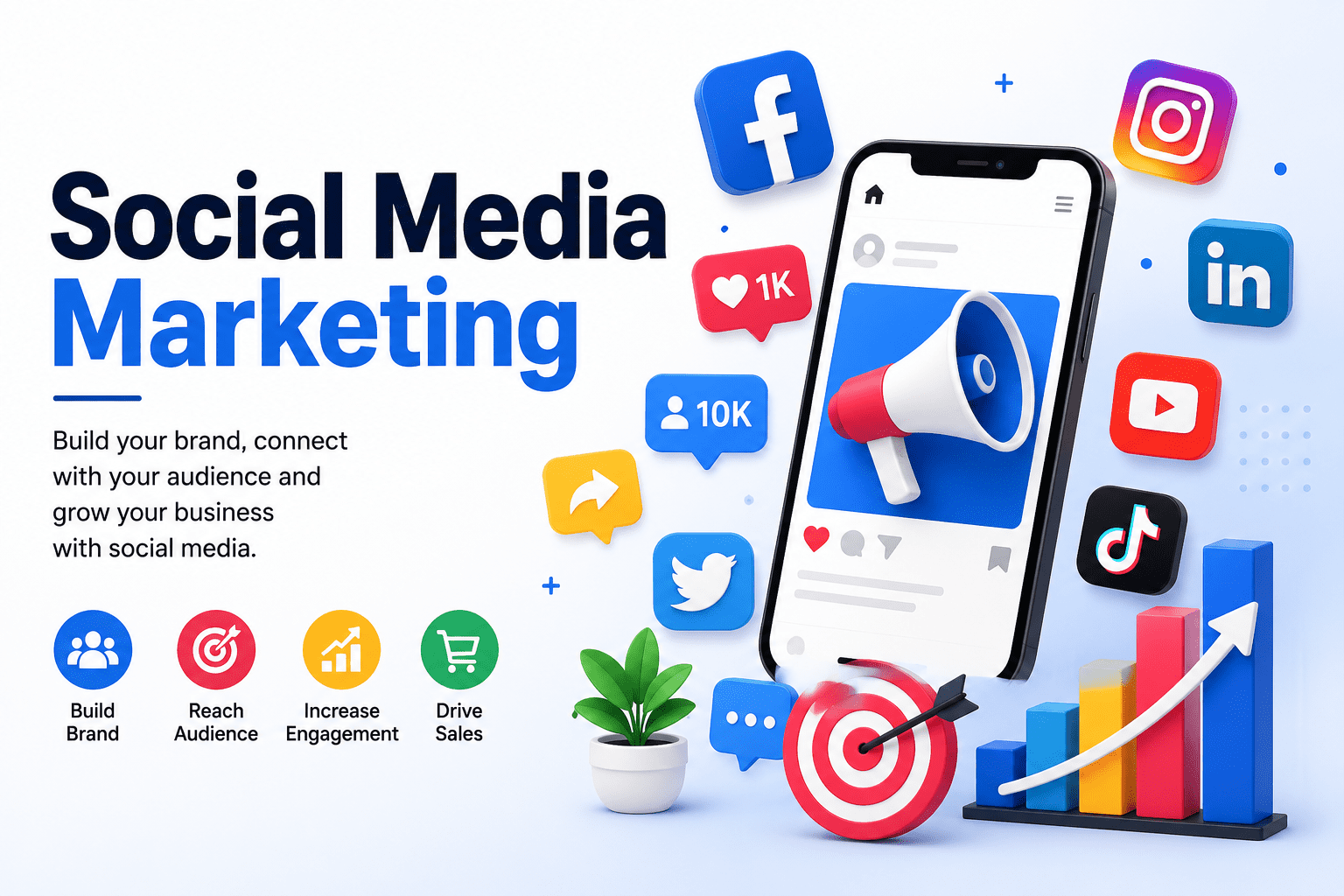


Businesses rely on Social Media Marketing to strengthen brand visibility, build customer relationships, optimize advertising campaigns, and achieve measurable growth through data-driven marketing strategies.
Absolutely! I completely agree. Social media marketing is not just about increasing visibility it’s also about building trust, engaging with customers, and using data to make smarter marketing decisions. Thanks for sharing your thoughts!