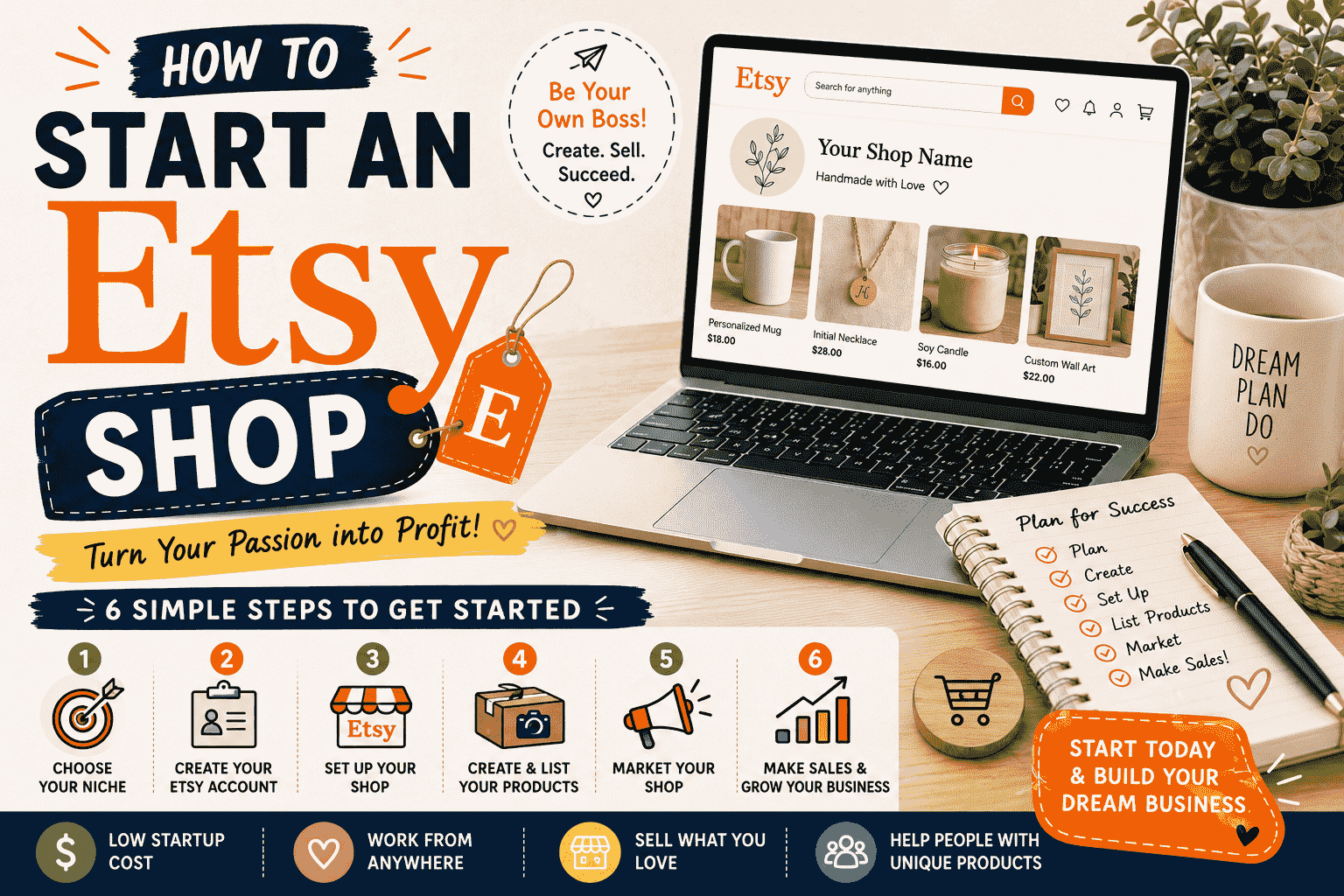
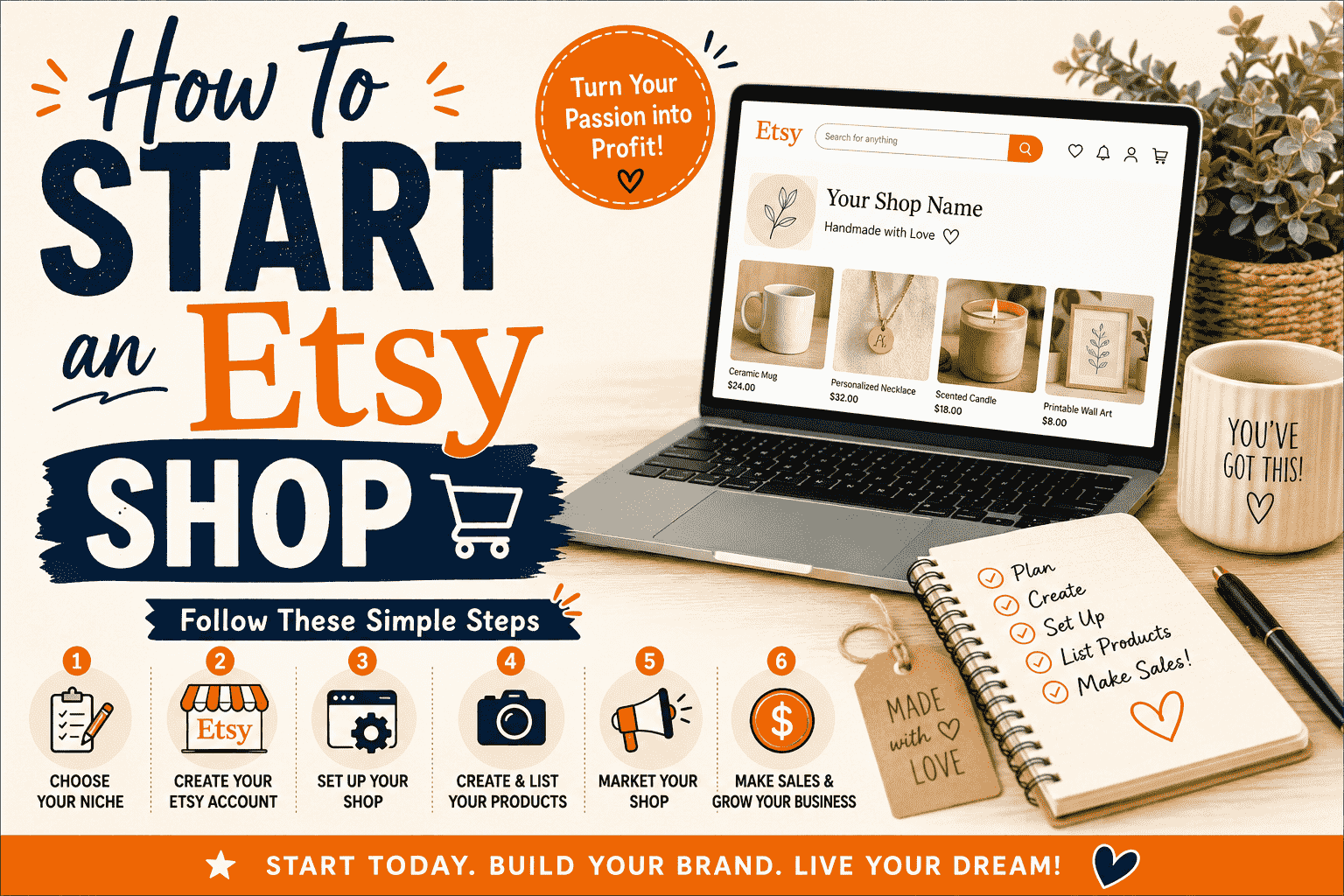
Step 1: Decide If Etsy Is Right for You
Before you invest your time and money, pause and ask yourself a few honest questions. Are you building a side hustle, a part-time income stream, or a long-term brand? Are you willing to learn product research, pricing, and customer service — not just create products?
Etsy works best for sellers who value creativity and flexibility and don’t expect overnight riches. So, if you’re prepared to treat it like a real business rather than a lottery ticket, you’re already ahead of most beginners.
Step 2: Choose Your Niche and Products
Next, and arguably most importantly, comes your niche. Rather than trying to sell “a little bit of everything,” successful Etsy shops usually own one specific category — think personalized jewelry, printable planners, or custom pet portraits.
To validate your idea, search your product on Etsy and see how many similar listings show up, and how well they’re performing. Tools like eRank or Marmalead can also show you real keyword search volume, so you’re not just guessing.
Quick tip: Look for products that balance demand and competition. A niche with zero competition often means zero demand, too — so aim for something popular enough to prove there’s a market, but specific enough that you can stand out.
Step 3: Set Up Your Etsy Seller Account
Once you’ve settled on a niche, it’s time to make it official. Head to Etsy.com/sell and click “Get Started.” From there, you’ll:
- Create your Etsy account (or log in if you already have one)
- Choose your shop language, country, and currency
- Pick a shop name — one that’s memorable, easy to spell, and reflects your niche
- Set your payment method so you can get paid
- Add your billing information for fees
Etsy Standard, the platform’s free toolkit, gives you everything you need to open your store and start selling — no monthly subscription required. Later on, if you want extra features like advanced stats and custom branding, you can upgrade to Etsy Plus for a small monthly fee.
Step 4: Understand Etsy’s Fees Before You Price Anything
Here’s where a lot of beginners go wrong — they list products without ever calculating what Etsy actually takes. So, before you price a single item, get familiar with these core fees:
- Listing fee: $0.20 per listing, active for four months or until it sells
- Transaction fee: 6.5% of the total sale price, including shipping
- Payment processing fee: Roughly 3% + $0.25 per transaction (varies by country)
- Optional setup fee: Some new shops see a one-time $15 charge for account verification
At first glance, these fees might seem small. However, they add up fast — especially if you’re listing hundreds of products. Consequently, always build these costs into your pricing from the very beginning, rather than realizing too late that you’re losing money on every sale.
Step 5: Create Listings That Actually Convert
With your shop live, it’s time to focus on what will make or break your sales: your listings. Specifically, three things matter most.
First, your photos. Real, well-lit product photos consistently outperform generic mockups. Aim for multiple angles, lifestyle shots, and close-ups that show texture and detail.
Second, your titles and keywords. Use the words your buyers are actually searching for — not clever or vague phrasing. For instance, “Personalized Name Necklace, Gold, Gift for Her” will outperform “Beautiful Necklace” every time.
Third, your descriptions. Write like you’re explaining the product to a friend, not a search engine. Cover materials, sizing, customization options, and shipping times clearly, so buyers know exactly what they’re getting.
Step 6: Price for Profit, Not Just for Sales
Once your listings are ready, resist the temptation to underprice just to compete. Instead, calculate your true cost — materials, labor, packaging, and every fee mentioned above — and then add a fair profit margin on top.
Remember, a sale that doesn’t actually make you money isn’t a win. It’s a shop slowly working against itself.
Step 7: Promote Your Shop and Build Momentum
Finally, once your shop is live, don’t just sit back and wait. Share your listings on social media, ask early customers for reviews, and consider small, targeted Etsy Ads campaigns once you understand your margins. Over time, as reviews and sales accumulate, Etsy’s own search algorithm will start favoring your shop — meaning organic traffic will grow on its own.
Common Mistakes to Avoid
- Skipping SEO research and hoping buyers will find you anyway
- Underpricing just to appear competitive
- Listing too few products, which limits your visibility in search
- Relying too heavily on ads instead of building organic optimization
- Ignoring your numbers, and only realizing later that fees ate your profit
Avoiding these missteps early on will save you months of frustration — and a lot of wasted money.
Final Thoughts
Starting an Etsy shop might feel overwhelming at first, but once you break it down step by step, it’s genuinely achievable — even if you’re starting from zero. Ultimately, the sellers who succeed aren’t necessarily the most talented; they’re the ones who treat their shop like a real business: researching their niche, pricing correctly, and showing up consistently.
So, if you’ve been sitting on a product idea, there’s no better time to start than now.
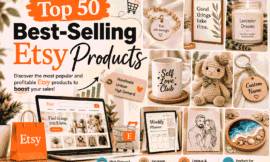
Ready to pick your first product? Check out our guide on the Top 50 Best-Selling Etsy Products for proven ideas to kickstart your shop.


Write a blog on “Best AI Tools for E-commerce “
Thanks for the suggestion! 👍 I’ve already written the blog on “Best AI Tools for E-commerce” and scheduled it to be published on August 9, 2026, at 12:15 AM.
Thanks for the great topic idea! 😊