What is E-commerce?
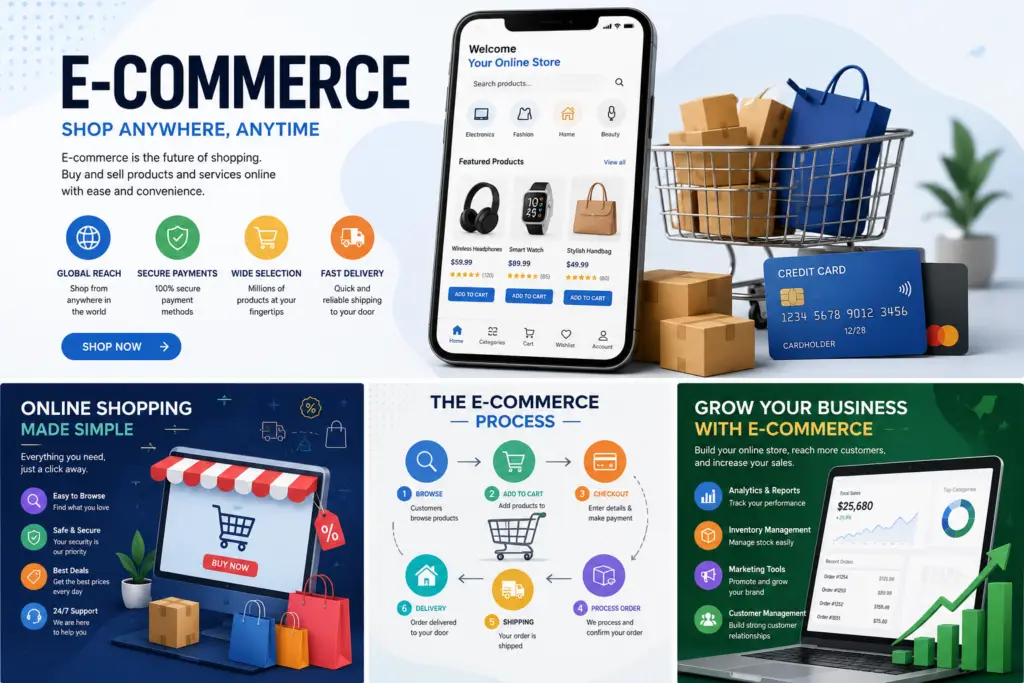
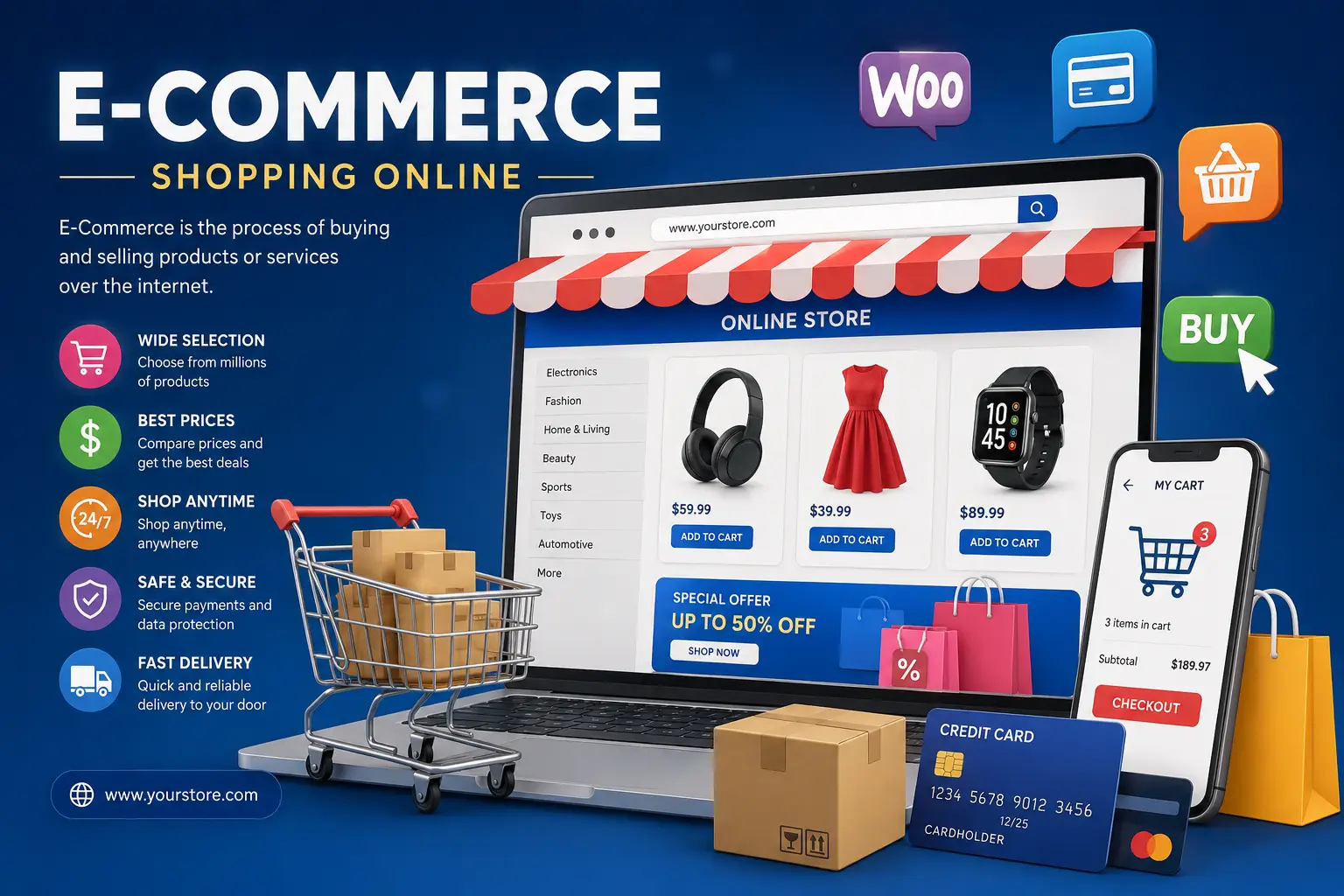
E-commerce (Electronic Commerce) is the process of buying and selling products or services over the internet. Customers browse products online, place orders, make secure digital payments, and receive their purchases through shipping or digital downloads.
Unlike traditional retail stores, e-commerce businesses can operate 24 hours a day and reach customers worldwide.
Why is E-commerce Growing So Fast?
The global e-commerce industry continues to grow due to several key factors:
Increased internet access
Smartphone shopping
Secure online payment systems
Fast delivery services
Social media marketing
AI-powered product recommendations
Consumer preference for convenience
Businesses of all sizes—from startups to multinational brands—are investing heavily in online commerce.
Types of E-commerce
1. Business-to-Consumer (B2C)
Businesses sell products directly to customers.
Examples:
Amazon
Walmart
Shopify stores
2. Business-to-Business (B2B)
Companies sell products or services to other businesses.
Examples include:
3. Consumer-to-Consumer (C2C)
Individuals sell products to other individuals through online marketplaces.
Examples include:
4. Consumer-to-Business (C2B)
Individuals offer services or products to businesses.
Examples include:
Freelancers
Photographers
Designers
Content creators
Popular E-commerce Platforms
Choosing the right platform is one of the most important decisions for any online business.
Popular platforms include:
Shopify
WooCommerce
Etsy
eBay
Amazon
BigCommerce
Wix
Squarespace Commerce
Each platform offers unique advantages depending on your business goals.
Benefits of E-commerce
1. Global Reach
Sell products to customers worldwide without opening physical stores.
2. Lower Costs
Online stores require less investment than traditional retail shops.
3. 24/7 Sales
Customers can shop at any time, increasing sales opportunities.
4. Easy Marketing
Use SEO, email marketing, social media, and paid advertising to attract customers.
5. Better Customer Insights
Track visitor behaviour, product performance, and sales data to improve your business.
Popular E-commerce Business Models
Dropshipping
Sell products without holding inventory.
Print on Demand
Sell customised clothing, mugs, posters, and accessories.
Private Label
Create products under your own brand.
Wholesale
Purchase products in bulk and sell them individually.
Digital Products
Sell templates, ebooks, courses, planners, and printable designs.
Essential Features of a Successful Online Store
A successful e-commerce website should include:
Fast loading speed
Mobile-friendly design
Secure checkout
Product reviews
High-quality images
Multiple payment options
Live chat support
Clear return policy
SEO optimisation
SEO Tips for E-commerce Websites
Search Engine Optimisation (SEO) helps customers find your store through Google.
Optimise Product Titles
Use keywords customers search for.
Write Unique Product Descriptions
Avoid copying manufacturer descriptions.
Improve Website Speed
Fast websites rank better and convert more visitors.
Use High-Quality Images
Optimise images with descriptive file names and alt text.
Internal Linking
Connect related products and blog articles.
Create Helpful Blog Content
Publishing informative blogs builds authority and attracts organic traffic.
Best Marketing Strategies for E-commerce
Search Engine Optimisation (SEO)
Generate long-term free traffic.
Social Media Marketing
Promote products on Instagram, Facebook, Pinterest, TikTok, and LinkedIn.
Email Marketing
Build customer loyalty through newsletters and promotions.
Content Marketing
Publish useful blogs, buying guides, and tutorials.
Influencer Marketing
Partner with creators to reach targeted audiences.
Paid Advertising
Use Google Ads and social media ads to drive immediate traffic.
Common Challenges in E-commerce
High competition
Cart abandonment
Rising advertising costs
Inventory management
Customer returns
Fraud prevention
Shipping delays
Businesses that focus on customer experience and continuous improvement are more likely to succeed.
E-commerce Trends for 2026
The future of e-commerce is being shaped by technology and changing consumer behaviour.
Key trends include:
Frequently Asked Questions (FAQs)
What is e-commerce?
E-commerce is the buying and selling of goods and services through the internet.
Which e-commerce platform is best for beginners?
Shopify and WooCommerce are excellent options for beginners because they are user-friendly and scalable.
Can I start an e-commerce business with a small budget?
Yes. Many entrepreneurs begin with dropshipping, print-on-demand, or digital products, which require relatively low upfront investment.
How do I get traffic to my online store?
You can attract visitors using SEO, social media marketing, email campaigns, content marketing, influencer partnerships, and paid advertising.
Is e-commerce profitable in 2026?
Yes. With the right products, marketing strategy, and customer service, e-commerce remains one of the most profitable online business models.
Conclusion
E-commerce continues to offer incredible opportunities for entrepreneurs, freelancers, and established businesses alike. Success comes from choosing the right niche, providing excellent customer experiences, implementing effective SEO, and staying up to date with industry trends.
Whether you want to sell physical products, digital downloads, or services, building an online presence today can create long-term growth and sustainable income. By focusing on quality, trust, and continuous improvement, your e-commerce business can thrive in 2026 and beyond.