What Is Artificial Intelligence?
Artificial Intelligence is technology that allows computers and machines to perform tasks that normally require human intelligence. These tasks can include understanding language, recognizing images, analyzing information, making predictions, and solving problems.
AI systems can learn from large amounts of data and use that information to produce useful results. Popular examples include AI chatbots, voice assistants, recommendation systems, translation tools, and image-generation software.
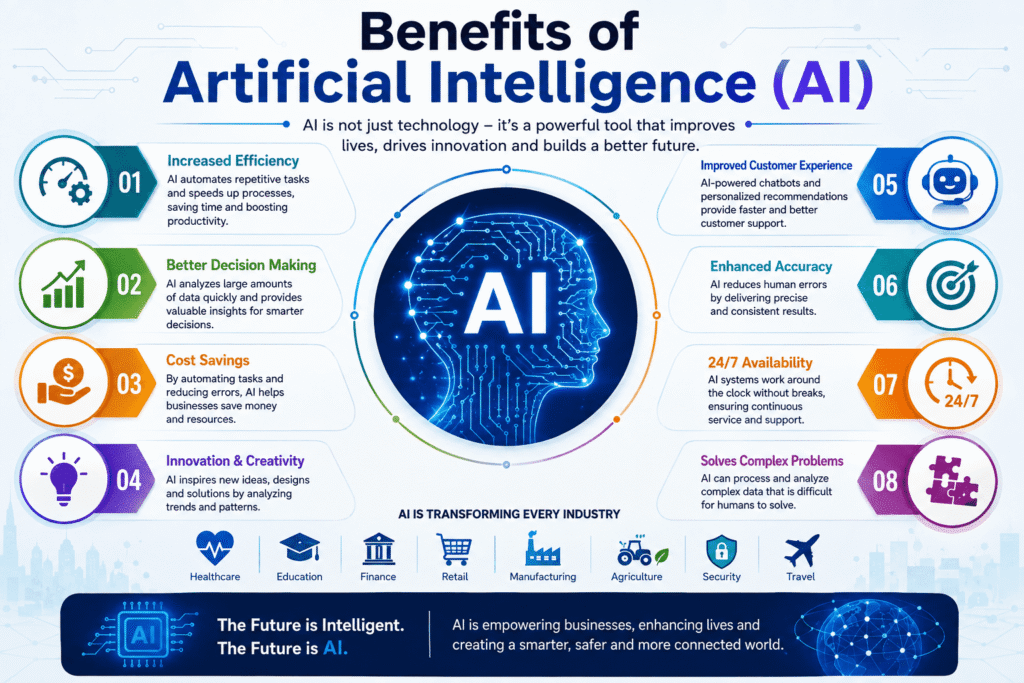
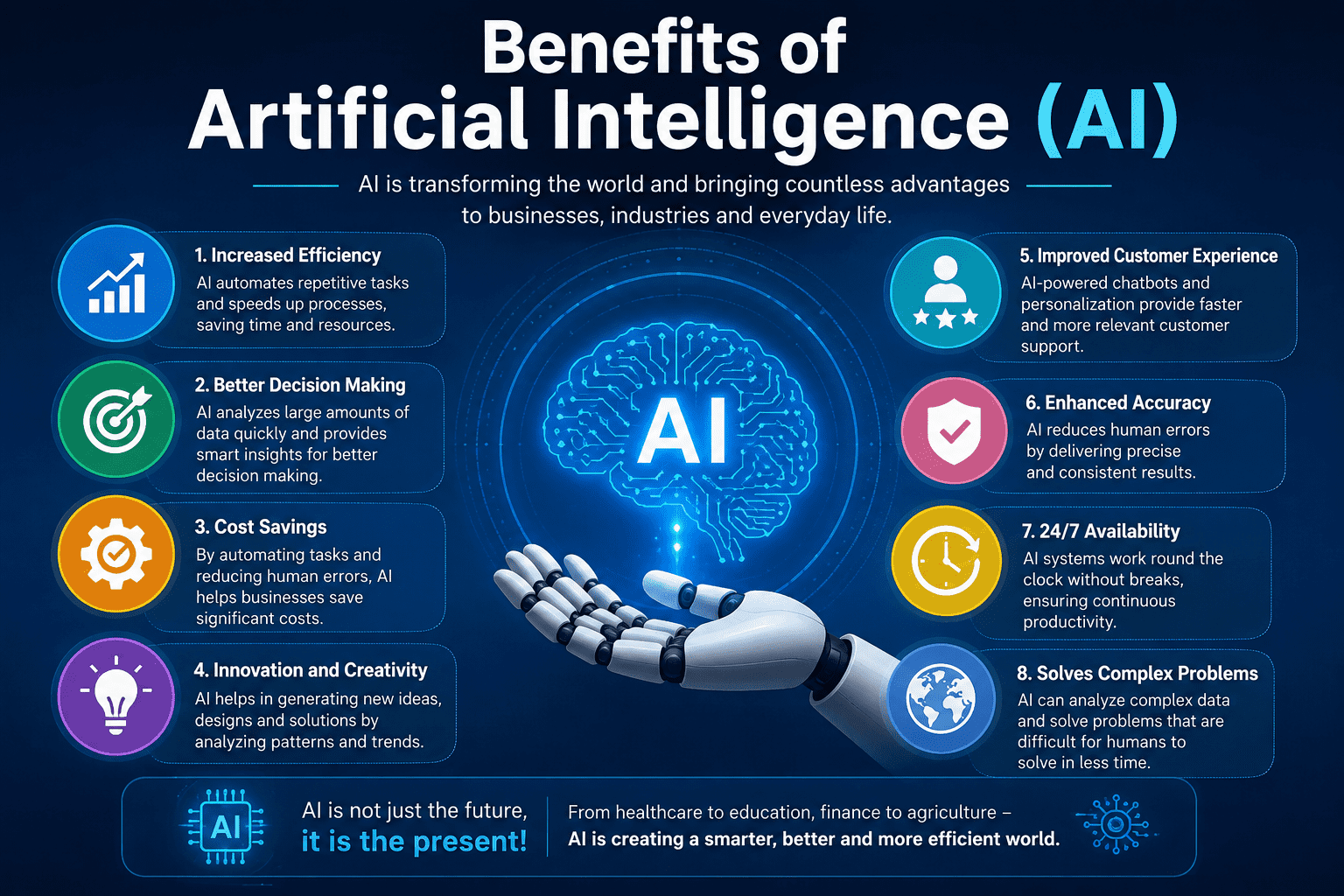
1. AI Saves Time
One of the biggest benefits of AI is that it can save time. AI can complete repetitive tasks much faster than humans.
For example, businesses can use AI to organize information, answer common customer questions, analyze documents, and generate reports. This allows employees to spend more time on important creative and strategic work.
2. AI Improves Productivity
AI can help people get more work done in less time. Students can use AI tools to understand difficult topics, while professionals can use them to organize ideas, summarize information, and prepare documents.
Businesses can also automate routine processes with AI, helping teams work more efficiently.
3. AI Helps Businesses
Artificial Intelligence has become a valuable tool for businesses of all sizes. Companies can use AI to understand customer behavior, analyze sales data, improve marketing campaigns, and provide customer support.
For example, an online store can use AI to recommend products based on a customer’s interests and previous activity. This can create a more personalized shopping experience.
4. AI Provides 24/7 Support
Unlike human employees, AI-powered systems can operate around the clock. Chatbots can answer frequently asked questions at any time of the day or night.
This can be particularly useful for online businesses that have customers in different countries and time zones.
5. AI Can Help With Decision-Making
Businesses and organizations often have large amounts of data to analyze. AI can process this information quickly and identify patterns that may be difficult for humans to notice.
For example, AI can help businesses analyze sales trends, customer preferences, and market data. However, important decisions should still involve human judgment and appropriate verification.
6. AI Supports Education
AI is also changing the way people learn. Students can use AI-powered tools for explanations, practice questions, language learning, research assistance, and personalized study support.
Teachers can also use AI to create learning materials and organize educational content.
The best results come when students use AI as a learning assistant rather than simply copying its answers.
7. AI Helps With Content Creation
AI can assist with many types of content, including blog ideas, outlines, social media posts, images, presentations, and video concepts.
For bloggers and marketers, AI can make the content-planning process faster. However, human editing, original ideas, fact-checking, and personal experience are still important for creating high-quality content.
8. AI Improves Customer Experience
Many companies use AI to provide personalized experiences. AI can analyze customer interactions and suggest products, services, or information that may be relevant.
For example, streaming platforms can recommend movies and music based on previous activity. E-commerce websites can recommend products that match a customer’s interests.
9. AI Can Reduce Human Errors
AI systems can perform certain repetitive and data-heavy tasks consistently. This can help reduce mistakes caused by fatigue or repetitive manual work.
However, AI is not perfect. It can also produce incorrect information, so important results should be reviewed by a qualified person.
10. AI Creates New Opportunities
AI is not only changing existing jobs and businesses; it is also creating new opportunities. People are learning AI-related skills such as prompt writing, automation, data analysis, AI marketing, and AI-assisted content creation.
Entrepreneurs can also use AI to develop new services and improve existing businesses.
Benefits of AI for Small Businesses
Small businesses can benefit from AI without needing a large technology team. AI tools can help with:
- Customer support
- Social media marketing
- Email writing
- Product descriptions
- Data analysis
- Market research
- Content planning
- Business automation
Using the right tools can help small businesses compete more effectively and reduce the amount of time spent on repetitive work.
Is AI Good or Bad?
AI itself is a technology, and its impact depends on how people use it. Used responsibly, AI can save time, improve productivity, support education, and help businesses grow.
At the same time, AI can create challenges such as misinformation, privacy concerns, job disruption, and inaccurate results. This is why responsible use, human oversight, and fact-checking are important.
Final Thoughts
Artificial Intelligence is becoming an important part of everyday life and modern business. Its ability to analyze information, automate repetitive tasks, provide assistance, and personalize experiences makes it a powerful technology.
The biggest benefit of AI is not necessarily replacing people. Instead, AI can help people work smarter by handling certain tasks while humans focus on creativity, judgment, communication, and decision-making.
As AI technology continues to develop, learning how to use it responsibly can be a valuable skill for students, professionals, entrepreneurs, and businesses.